About Richard

Inventor, entrepreneur, father, medical device manager.

Heart and Myotonic Dystrophy

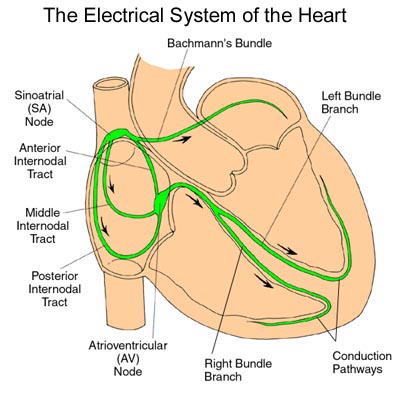
Myotonic Dystrophy is a type of Muscular Dystrophy. The heart is a kind of muscle so you would think it would be affected. The heart is affected but not in the way that you think. The heart muscle cell is not affected what causes the problems in myotonic dystrophy is the electrical conduction of the heart. The heart has an electric circuit like your car. Think of the problems like the circuit is not sending the proper signals to the engine to fire the cylinders at the right time. Sometimes the signals are too slow. Sometimes they are too fast. Sometimes they dont signal at all. Click the link below for a  brochure on this topic People that have either myotonic dystrophy or the congenital form are at a high risk of developing life threatening heart problems. There is a correlation between the number of repeats for the diseases and the severity of the cardiac problems. Eleven percent (11%) of patients in a recent study died suddenly from what is believed to be cardiac problems. Another 28% had cardiac problems of one type or another.    Heart Problems in Myotonic Dystrophy

Although coronary heart disease is not increased in DM patients, there is a greater than average occurrence of disturbed conduction issues among DM1 and DM2. The cardiac conduction defects are usually characterized by palpitations, fainting or near fainting spells can occur and should never be ignored. These can be fatal. These
arrhythmia’s can occur in an otherwise healthy heart. An arrhythmia is a disturbed conduction of the heartbeat. Cardiac arrhythmia’s and sudden death are a major cause of mortality in Myotonic Dystrophy patients, even in young patients with limited muscle problems. Acute arrhythmic disorders should be treated by a cardiac specialist who has
experience with DM patients. Patients must always let their attending physician know that
they have Myotonic Dystrophy. In many cases the physician may not be familiar with DM so the patient should be prepared to present materials to the physician.

Dr. William Groh in Indianapolis, IN USA is the recognized expert in the cardiac care of patients with myotonic dystrophy. Cardiac disease in MMD1, Groh says, is nearly always conduction disturbance, resulting from the gradual replacement of the heart’s conductive tissue with scar tissue, a process known as cardiac fibrosis. It’s the conduction of electrical signals that move through the heart that first disturbed in patients with myotonic dystrophy,

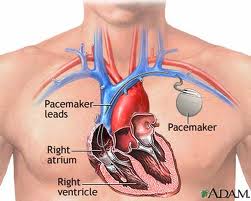
Conduction disturbance can lead to abnormal heart rhythms called arrhythmias. Arrhythmias that are too slow sometimes require a pacemaker that delivers regularly timed electrical impulses to bring the heart rate up to normal.

When the heart rhythm is too fast, an implantable defibrillator can deliver an electrical shock to restore a normal heart rhythm. These are called ICD’s

the underlying problem  with the heart in myotonic dystrophy s fibrosis and abnormalities in the heart that seem to specifically and primarily affect the conduction system, the specialized tissue that allows for electricity to flow through the heart. It leads to a higher risk of arrhythmias, and a small percentage of patients develop cardiomyopathy.”

The most serious arrhythmias are those that cause the lower chambers of the heart — the ventricles — to stop beating or to beat too slowly to sustain life; or to beat in a fast, uncoordinated and ineffective way. Both these fast and slow ventricular arrhythmias can lead to sudden death, and people with MMD1 unfortunately are at increased risk for that.

Here is a great video from the Library at the Myotonic Dystrophy Foundation. This video talks about the heart and the electrical issues in the heart with Myotonic Dystrophy

Pacemakers and Defibrillators: Pacemakers are generally used to manage a heartbeat that is too slow or irregular, caused by disorders that disrupt the heart’s normal electrical conduction system. This condition known as bradicardia can cause inadequate blood flow through the body creating symptoms such as fatigue, dizziness, and fainting.
CK Recommendations for Patients with DM from Scottish Workgroup

  • All individuals with myotonic dystrophy should receive a baseline ECG
  • Patients with significant muscle disease and/or abnormal ECG should receive an annual ECG (Grade C)
  • Patients with mild symptoms and a normal or minimal ECG should have their ECG repeated every 2 years (Grade C)
  • Asymtomatic gene carriers should be offered an ECG at 5 year intervals
  • Patients whose ECG indicate significant (second degree or greater) heart block should be referred to Cardiology
  • Children with symptomatic myotonic dystrophy should have regular pediatric review including an annual ECG
*This information was copied from the evidence based clinical guidelines developed by the Collaborative Project Byall Scottish Clinical Genetics Services.

Disability Benefits

UNITED STATES
Individuals with CMyD and MD may be eligible for disability payments (money) from the government.  There is a web site that gives more information and can help you apply. This information only pertains to US citizens.

It might be difficult to qualify for these benefits. The government is trying to cut back on the amount they pay for disability. The help of an expert might be required.

WEB SITE FOR SOCIAL SECURITY DISABILITY

They have a book you can buy for $49.95 plus $7 shipping. The book is called “How to apply and win Social Security Administration Disability Benefits“. Also, if you wish they can assist in navigating the complex process of applying for benefits.

The General feeling is that a person in the US should apply for disability as soon as they are unable to work a standard 8 hour day for 5 days a week. It is important to apply as soon as possbile. With the complexity of a DM case you might want to consider a professional that would help you.

They don’t charge upfront but will take your case on a fee if they win basis.

Frederick Johnson 410/740-0454 for more info

ENGLAND
During our visit to the Muscular Dystrophy conference in England we were able to talk with the social services people in England. For a disability the social security type system in England pays the individual more than what they were making when they were working. A nice system that perhaps the USA might adopt. There is additional information on social services at the 12th annual conference web site about this disease..

Doctors Knowledgeable about DM

We are continuing to list doctors that have a working knowledge of DM.  Most doctors will not have any patients that have had DM because the incidence of the disease is about 1/8000 and the average doctor will have less than 3000 patients. Usually about 2000 patients in multigroup practice. Thus the burden is on you to educate the doctor or find a doctor that has seen many DM patients. These doctors come to us from our members reporting from their experience. If you know a good doctor please let us know so we can add them to the site.

From:  Janet Moravec mspootsma1@aol.com

I would like to submit to you two doctors who I found to be very interested  and knowledgeable. They both are affiliated with the University of Florida in Gainesville, FL, Shands Medical Center. I asked for their approval to submit their names and it was approved. These are  the doctors I am going to. I have great confidence in their abilities, and as you know that is half the battle.

Melvin Greer, MD,  Professor and Chairman – Dept of Neurology
e-mail – greerm@neurology.ufl.edu
phone – (352) 265-8408

M. Tariq Bhatti, MD, Associate Professor, Neuro-opthalmology Service
Dept of Opthalmology
e-mail – tbhatti@eye1.eye.ufl.edu
phone – (352) 846-2102

Education

EDUCATION

For some families the diagnosis of Myotonic Dystrophy is made via their child who may have some learning disabilities. Myotonic Dystrophy affects learning and makes it more difficult for children to learn certain tasks. For some reason some tasks are more difficult for these children. Here is some additional information on Learning disabilities from the Netherlands

Its  important to begin education at the earliest level. Birth-3 programs are available in the USA. This intensive help will optimize the educational structure for the child. Most children will begin in Special education classes before kindergarten. Because of the child’s ability to imitate, mainstreaming in regular school should be considered. Here is some specific information:

From the MDA USA: Dr. Ed Goldstein MDA Clinic Director Atlanta Georgia

Q: My child is in an integrated kindergarten. Are there any specific strategies for learning that the school should be aware of?

A: The Spectrum of mental development in children with CMD is quite different from that of the general population. In some studies, 2/3 of these children are mentally retarded (MR); meaning that they have a persistent, global delay in their cognitive development. In addition to varying degrees of mental retardation, many CMD have learning disabilities (LD). These are problems in selected areas of mental processing, which interfere with certain aspects of the educational process. Many of the patients that I follow have a component of Attention Deficit Hyperactivity Disorder (ADHD), which is typified by hyperactivity, impulsivity and distractibility. In the absence of significant heart disease, these ADHD symptoms can sometimes be treated with the use of stimulant medications like Ritalin or Dexedrine. Finally CMD patients are described who have elements of Pervasive Development Disorder (PDD) which is characterized by decreased reciprocal social interaction. What I typically recommend for children is the performance of psychometric testing by a developmental psychologist. This is a test of his mental capabilities and will define the elements of MR, LD, ADHD, PDD and provide insight into the nature of some behavioral problems. This type of testing is not inexpensive, often costing $1000 to $2000. However, good Psychometric Testing is the only way that you can gain appropriate insight into the nature of your child’s thought process, thereby permitting you to make informed decisions about school environments, rehabilitative therapies and behavioral interventions. Your local school system may provide this testing for you.

The variability juvenile and congenital forms of the disease will make management of the educational process unique to each child. Some of the important issues to deal with are the behavioral issues that arise.  Things like incontinence, learning disability, speech problems need to be dealt with. We are still searching for more information on these subjects.

More information on education and learning strategies are needed. If you are an educator please write and send information about what you are doing in your classroom!

Encopresis

Your Child and Encopresis
Susan Poulton, RNC, ARNP, CNS II and Jeanne Torrens, RN, MSN, CNS II
Updated Spring 2001 by Joni Bosch, PNP

What is encopresis?

When a child who is older than four regularly has stool or bowel movement accidents, the condition is called encopresis. Chronic constipation often leads to encopresis. The stools may be firm, soft, or liquid. We don’t always know why an individual begins to have encopresis.

What causes encopresis?

During toilet training, a child learns how to control bowel movements. During this process, the child is taught to recognize signals from the muscles and nerves that warn it is time for a bowel movement. If something interferes with these signals, then stool accidents will eventually happen.

Encopresis occurs when feces, or stools, are allowed to build up in the colon (or large intestine) over a period of time. This may happen because a child does not have regular bowel movements, or because the bowel doesn’t empty completely on a regular basis. Over time, the feces that stay in the bowel become large, hard, and dry. At this point, having a bowel movement may be painful. Liquid feces often leak out around the hard, dry stool. The colon and rectum stretch. The stretched muscles and nerves give fewer and fewer signals to the child’s brain about the need to have a bowel movement. This decrease in signals results in stool accidents, and the colon and rectum often don’t empty as they should (see Figure 1).

1. Feces or bowel movements move through the colon on their way to the rectum.

2. If these feces aren’t passed…

3. … they will collect into a large mass in the rectum. This can cause a condition known as megacolon. More liquid fecal matter will sometimes run down around the more solid feces.

4. If the child’s sphincter relaxes, liquid waste may leak enough to soil a child’s clothing.

How can I tell if my child has encopresis?

You should be concerned about the possible development of encopresis if you find the following:

Your child has stool accidents or liquid stools at times other than during an illness.

Your child complains about clothing that is too tight around the waist. If you press gently around the edges of your child’s stomach or abdomen, you may find a mass that feels almost like the links of a sausage. The mass might be on one side, or might have the shape of a large, upside down U that runs up one side of the abdomen, across the top and down the other side.

Your child complains of pain related to having a bowel movement. Sometimes a child will tell you that he or she can’t go to the bathroom because it hurts too much.

Your child has a poor appetite. A child with encopresis may complain of a stomach ache, heartburn, or cramps; may feel too full to eat; or may vomit.
Why is encopresis a concern?

Untreated encopresis can lead to several conditions that threaten the health of your child. These conditions include:

Megacolon, a disorder in which the colon gets bigger because of the large amount of feces that stay in the bowel. As the colon gets bigger, its muscles and nerves lose the ability to signal the need for a bowel movement.

Bleeding and cracking of the skin, called fissures, may occur around the rectum as the result of passing large, hard, dry stools. This can be very painful.

Blood may appear in the stool, due to the irritation of the colon lining caused by hard, dry, compacted feces.

Children may develop urinary tract infections and wetting accidents when the overloaded colon presses on the bladder, or prevents the bladder from emptying completely.
Treatment
How is encopresis treated?

The success of any treatment for encopresis will depend on the two factors:

The child’s ability to carry out the treatment plan.
The family’s support of the child.

Encopresis cannot be cured overnight.
It is important to understand what encopresis really is. The problem is not “in the child’s mind.” It is not a “behavior problem.” Encopresis happens because a child’s colon doesn’t work as it should.

The child and the family will need to be patient. It is important that the child isn’t blamed or teased about this condition. Instead, the child should be praised as each step of the treatment is successfully carried out.

The treatment of encopresis begins with the use of enemas to clean out the colon and rectum. When this has been done, the child will need to regularly take laxatives to soften stools and promote bowel movements. The child won’t become addicted to the laxative, or dependent on its use. Laxatives are needed to help clear out the feces. Then the laxative helps the colon begin to work correctly.

In addition, the child will need to use a regular toileting schedule. After each meal and at bedtime, the child must sit on the toilet and try to have a bowel movement. This goal is to establish a pattern of regular bowel movements. It is easier to have a bowel movement after meals because of the gastrocolic reflex that occurs when we eat. As food goes to the stomach to begin to be digested, this reflex makes the intestines contract to move the stool along so that there will be room for more digested food.

As part of toileting, a child will need to practice the Valsalva maneuver. This is the technique of holding your breath while tightening your abdominal muscles and bearing down to have a bowel movement.

Fiber

Fluids

Exercise
Diet and exercise are important.

A child should eat foods that are high in fiber, like fresh vegetables and fruits.
They should drink plenty of fluids throughout the day.
Exercise is also important in starting and maintaining healthy bowel habits.
These three factors — fiber, fluids, and exercise — help keep stools soft and bowel movements regular.

The successful treatment of encopresis typically takes from six to twelve months. It is important to continue both the bathroom schedule and the use of laxatives. This should be done for at least 6 months, while the colon heals.

Remember that even after treatment ends, a child must maintain good eating, exercise, and toileting habits. When this is done, encopresis usually will not recur.

Please note — Before using this information, please discuss it with your family health care provider.

Find more information about this subject in the online catalog of our Disability Resource Library.

“Your Child and Encopresis: Easy Reading Flier”