Myotonic Dystrophy found to be cause of 9.7% of unknown Polyhydraminos

Excess amniotic fluid that surrounds the baby is one clue in diagnosis of myotonic dystrophy. This causes preterm labor and potential severe issues in the children. This study looks at cases of unknown polyhydramnois and concluded that 9.7% of this population that was studied had DM

Am J Obstet Gynecol. 1998 Oct;179(4):974-7.

Myotonic dystrophy is a significant cause of idiopathic polyhydramnios.

Source

Department of Obstetrics and Gynecology, University of Utah School of Medicine, Salt Lake City 84132, USA.

Daytime Sleepiness in Myotonic Dystrophy Causes

This is a study (1994)  that looked at the causes of sleepiness in patients with myotonic dystrophy. They concluded that these sleep issues are not caused by sleep apnea. A number of the patients were able to get some relief with Ritalin. Ritalin has a low amount of cardiac side effects. However, this drug may have some cardiac side effects so clear it with your doctor cardiologist before use

Daytime Sleepiness is not caused by Sleep Apnea

J Neurol Neurosurg Psychiatry. 1994 May;57(5):626-8.

Daytime sleep in myotonic dystrophy is not caused by sleep apnoea.

Source

Department of Neurology, University Hospital Rotterdam-Dijkzigt, The Netherlands.

Abstract

Daytime sleepiness is common in myotonic dystrophy and might be attributed to disturbed nocturnal breathing. Seventeen out of 22 patients complained of excessive daytime sleepiness, resembling “idiopathic hypersomnolence”. Sleep apnoea might have contributed to daytime sleepiness in only three of 17 patients. Treatment with the central stimulant methylphenidate produced sustained benefit in seven out of 11 patients tested. Daytime sleepiness in myotonic dystrophy is usually caused by dysfunction of central sleep regulation and not by disturbed nocturnal breathing.

Ritalin and Daytime Sleepiness in Myotonic Dystrophy

Sleepiness is a  issue with some adults and children with Myotonic Dystrophy. Sleepiness or Hypersomnia can have great impact on the social life of patients with myotonic dystrophy. Some patients have reported relief with Provigil although studies have indicated that there is no overall benefit. Provigil may work to help mobilize the sleep patterns so that a person can attend an event but then catch up on sleep later. A new study is looking at a different drug.

This study is by one of the worlds experts in the Disease (DM1) Dr. Puymirat in Quebec, Canada. This article  studies Dr. J PuyrimatRitalin (20mg) and Myotonic dystrophy related to sleepiness with some good results. However, it is noted that palpitations are a side effect of the study. The risks with Ritalin are low but make sure to see a cardiologist before using or having Ritalin prescribed.

Clin Ther. 2012 May;34(5):1103-11.

Potential Drug Pathways May 2011

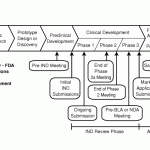
There are now quite a few different ways that myotonic dystrophy can be defeated. To the left is the pathway that the FDA requires and the most advanced pathways are still in animal studies. This is a nice article but technical.

 Therapeutics Development in Myotonic Dystrophy Type I

The publisher’s final edited version of this article is available at Muscle Nerve

Abstract

Myotonic dystrophy (DM1), the most common adult muscular dystrophy, is a multi-system, autosomal dominant genetic disorder caused by an expanded CTG repeat that leads to nuclear retention of a mutant RNA and subsequent RNA toxicity. Significant insights into the molecular mechanisms of RNA toxicity have led to the surprising possibility that treating DM1 is a viable prospect. In this review, we briefly present the clinical picture in DM1, and describe how the research in understanding the pathogenesis of RNA toxicity in DM1 has led to targeted approaches to therapeutic development at various steps in the pathogenesis of the disease. We discuss the promise and current limitations of each with an emphasis on RNA-based therapeutics and small molecules. We conclude with a discussion of the unmet need for clinical tools and outcome measures that are essential prerequisites to proceed in evaluating these potential therapies in clinical trials.

Continue reading

Anesthesia in Congenital Myotonic Dystrophy Case Report

Total intravenous anesthesia in a 10-month-old patient with congenital myotonic dystrophy undergoing endoscopic third ventriculostomy -A case report-

Abstract

Myotonic dystrophy is a rare genetic disorder characterized by muscle atrophy and weakness. Surgical treatment of this condition poses various problems for the anesthesiologist. We describe the anesthetic management of a 10-month-old infant with congenital myotonic dystrophy, who was scheduled for endoscopic third ventriculostomy under general anesthesia. Anesthesia was induced with thiopental sodium, fentanyl, and vecuronium, and thereafter maintained via continuous infusion of propofol and remifentanil. The train-of-four ratio was monitored throughout the operation, and muscle relaxation was reversed with pyridostigmine and glycopyrrolate at the end of the procedure. We show that total intravenous anesthesia using propofol and remifentanil is a satisfactory anesthetic technique in very young patients with congenital myotonic dystrophy.

Continue reading