Autism Spectrum Disorder in Congential and Childhood Myotonic Dystrophy

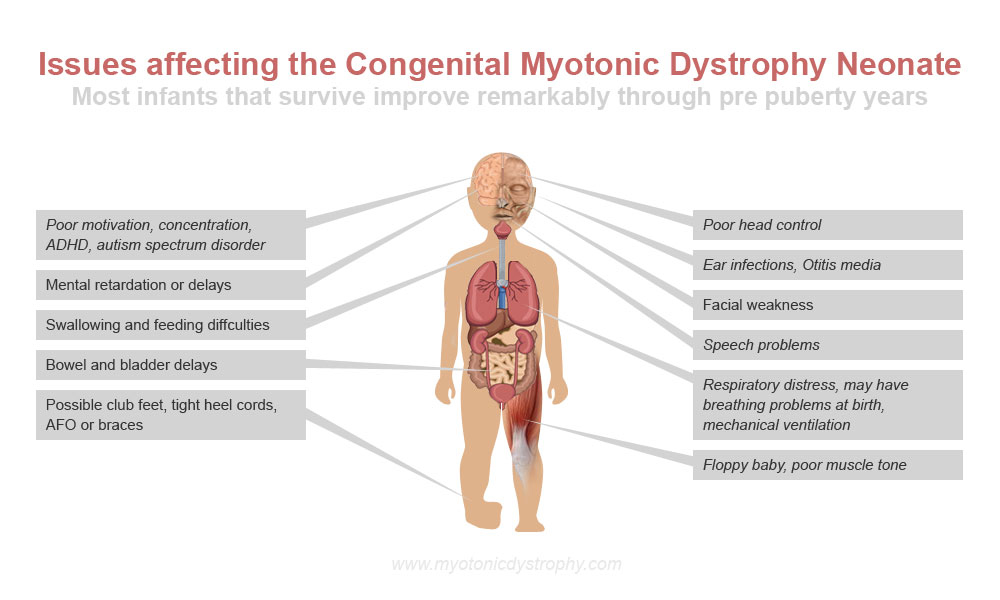
Issues and problems with children that have congenital or juvenile myotonic dystrophy are many and hard to pin down. One of the most asked questions is about Autism and do children with Congenital Myotonic Dystrophy have Autism or Autism spectrum disorder. The basic criteria more are defined below for Autism like Features are before 3 years old the following 3 features are delayed or not present:

(A) social interaction,
(B) language as used in social communication
(C) symbolic or imaginative play

The most advanced countries in the world studying these diseases are in the Scandinavian countries. Sweden has taken the lead in publishing a number of English studies that have helped understand this condition.  Dr, Eckstrom and others have done a fine job in the area of pulling more information out of surveys and studies to assist us with the understanding of this disease. This article is going to summarize the results of a study that was finished in 2008. There is a lot of information here so it will be a longer post:
Continue reading

Congenital Myotonic Dystrophy

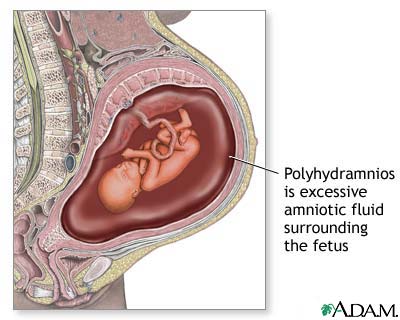
Congenital Myotonic Dystrophy is present at the birth of the Infant. A mother may notice excessive amniotic fluid or polyhydraminos. The mother may also notice less fetal movements than is normal.  The baby is born sometimes prematurely. It is a disease that will cause multiple symptoms in the baby. The link to the baby is the mother in almost all cases. For instance, out of 118 cases only 2 cases had any incident that the father was the carrier. However, Paternal transmission (by the father) is documented. (Paternal Transmission of Congenital Myotonic Dystrophy J Med Genet 1994;31518-520)  It seems as though the mother somehow causes the disease in the severe form. Some researchers postulate that there does not seem to be a genetic reason for the severe problems that may be caused by the disorder. It may be that the Myotonic Dystrophy in the mother somehow causes the severe congenital form.
In Sweden there is identified two types of congenital myotonic dystrophy, severe and moderate. In the severe type there is a life threatening condition at birth. This seems to be associated with male children more than female. With the moderate type of congenital myotonic dystrophy there is no life threatening condition birth. This information is contained in several studies as well as confirmed by by Ekstrom at a recent conference. The severe type will generally have more symptoms and more severe symptoms of the disease.
Congential as well as juvenile and adolenscent myotonic dystrophy are hard to diagnosis and identify. Part of the reason for this is that the medical profession does not recongnize this disease as a separate and distinct disease. They symtoms of congenital myotonic dystrophy are separate and distinct from mytonic dystrophy type 1. Thus, its hard for parents to identify the disease that their child may have. For example mental retardation and autism spectrum disorder are not symtoms of myotonic dystrophy. But they are symtoms of the congential or juvenile forms of the disease.

effects of Congenital Myotonic Dystrophy

Continue reading

Heart Review Myotonic Dystrophy

Editors note: This article was written in 2002 approximately 10 years ago. Its a review but more current information must be reviewed as well

MYOTONIC DYSTROPHY AND THE HEART

This article has been cited by other articles in PMC.

Myotonic dystrophy (dystrophia myotonica, DM) is the most frequently inherited neuromuscular disease of adult life. DM is a multisystem disease with major cardiac involvement. Core features of myotonic dystrophy are myotonia, muscle weakness, cataract, and cardiac conduction abnormalities. Classical DM (first described by Steinert and called Steinert’s disease or DM1) has been identified as an autosomal dominant disorder associated with the presence of an abnormal expansion of a CTG trinucleotide repeat on chromosome 19q13.3 (the DM 1 locus). A similar but less common disorder was later described as proximal myotonic myopathy, caused by alterations on a different gene on chromosome 3q21 (the DM2 locus). This article will mainly focus on DM1. It will provide an insight into the epidemiology and genetic alterations of the disease and provide up-to-date information on postmortem and clinical findings and on diagnostic and therapeutic options in patients presenting cardiac involvement.

EPIDEMIOLOGY AND CLASSIFICATION OF DM1

The incidence of DM1 is estimated to be 1 in 8000 births and its worldwide prevalence ranges from 2.1 to 14.3/100 000 inhabitants.1 Based on the age of onset and on its clinical features, DM1 can be divided into three forms: congenital, classical, and minimal, which may occur in the same kindred.

Continue reading

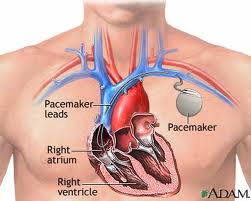
Pacemakers extend life of some Myotonic Dystrophy Patients

An invasive strategy, based on prophylactic permanent pacing, is associated with longer survival for patients with myotonic dystrophy type 1.

Karim Wahbi, MD, of Pitié-Saltpêtière Hospital in Paris, and colleagues conducted a retrospective study of 914 consecutive patients (>18 years) with genetically confirmed myotonic dystrophy type 1 who were admitted to the hospital from 2000–2009. Of the 486 patients whose electrocardiogram showed a PR interval >200 ms or a QRS duration >100ms, or both, 70.2% underwent an invasive treatment strategy based on systematic electrophysiological studies and prophylactic permanent pacing and 29.8% underwent a noninvasive strategy.

During a median of 7.4 years of follow-up, the researchers found that 50 patients in the invasive strategy group and 30 in the noninvasive strategy group died (hazard ratio [HR], 0.74; P=0.19), corresponding to an overall nine-year survival of 74.4%. Adjusting for between-group differences in baseline characteristics, the invasive strategy was associated with significantly longer survival, with adjusted HRs ranging from 0.47–0.61. The survival difference was mainly due to a reduced incidence of sudden death, which occurred in 10 patients in the invasive strategy group vs. 16 patients in the noninvasive strategy group (HRs ranging from 0.24–0.28).

“Among patients with myotonic dystrophy type 1, an invasive strategy was associated with a higher rate of nine-year survival than a noninvasive strategy,” the authors write.

One author disclosed financial ties to the medical device industry; one author disclosed financial ties to Genzyme.

Abstract
Full Text (subscription or payment may be required)

Continue reading

Myotonic Dystrophy Symptoms

Myotonic Dystrophy

Myotonic Dystrophy Symptoms: People with Myotonic Dystrophy  may exhibit more or more of the following symptoms which many vary in how severe they are.  Some people will have many of the symptoms others much fewer. There is a generally relationship between the number of repeats of the CTG on Chromosome 19  and the severity of the disease. There are two symtomology paths with DM. One is the standard or adult onset path. The other is the Juvenile or congenital path. See the Congenital and Juvenile sections for this information for the standard Myotonic Dystrophy Type 1

Polyhydramnios Image

Polyhydraminos (Excess amniotic fluid during pregnancy)
This symptom is present during pregnancy. Usually amniotic fluid is swallowed by the baby and expelled through the umbilical cord. This does not occur and fluid builds up in the mother and can trigger premature birth. Careful monitoring by a doctor is necessary.

Constipation

Constipation
The bowel and gastrointestinal tract are affected by the disease. This causes constipation and excessive time on the toilet. PAtients also report DIARRHEA Many patinets has have abnormalities of the bladder system as well

Continue reading