Lung Function and Myotonic Dystrophy

A consortium of doctors met and came up with some definitive pathways for patients with myotonic dystrophy
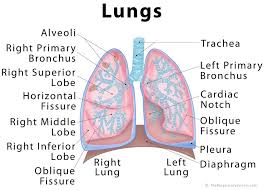
A Multi-country conference was held with doctor from most major European Countries and the USA to review respiratory or lung function in patients with Myotonic Dystrophy. Patients with DM have a lot of issues with lung function and respiration. A framework or step by step checklist was reviewed and recommended at this conference. The conclusion of this conference is presented below. This is a very complex subject so print this and bring it with you to your doctor or  pulmonologist. When you have myotonic dystrophy its important to have your lung function checked every 6 months or so.

Respiratory-insufficiency-in-Myotonic-Dystrophy

Management of respiratory insufficiency is challenging in
DM because of the pathophysiology of the disease, which
affects both muscles and central respiratory pathways and
patients’ cognitive and behavioral characteristics. Although
there are no natural history data on the effects of respiratory
care on survival and on morbidity in patients with DM, results
of ventilation on survival and on better care in other
neuromuscular diseases indicate that adequate ventilatory care
may improve survival and QoL of patients with DM1 [41–43].
NIV use varies greatly among the different centers, e.g. varying
from 20 to 60% in adults with DM1, 20–40% of patients with
the congenital form, and 15–20% of patients with DM2. All
participants agreed on the need for standard assessments and
recommendations for standard of care.
Discussion between the specialists from different countries
led to the construction of initial standard protocols which are
the necessary preliminary steps for validation processes to
follow. Specifically, the workshop led to the creation of: 1) a
respiratory symptom check-list to be applied in everyday DM
clinic (Table 1); 2) a preliminary version of a screening
respiratory protocol to be applied on first assessment during
clinic (Figure 1); 3) proposal of criteria for NIV prescription to
be used specifically in patients with DM, based on the existing
ACI (Consensus Statement from the Agency for Clinical
Innovation Respiratory Network on Domiciliary Non-Invasive
Ventilation in Adult Patients) guidelines for NIV, including
recommendations for timing and tests to be performed on
follow-up assessments; 4) proposal of a secretion management
protocol (Figure 2).
The need for validation of these recommendations and for
further research to extend the evidence-base in certain key areas
was also highlighted and outline proposals to resolve these
deficiencies put forward. All participants agreed on the urge for
more natural history data and for specific pathways for
emergency care of acute respiratory insufficiency in DM.

Falling Down and Myotonic Dystrophy

falling down in myotonic dystrophy

New information available that will help lend insite into this pervasive problem with myotonic dystrophy. Here is the link to the full study https://www.sciencedirect.com/science/article/pii/S0960896617314037

Highlights

  • This is the first high scale survey for falls and fractures for Myotonic Dystrophy 1.
  • DM1 adults showed 2.3 more risk of falling than a healthy adult over 65 years of age.
  • These results presented no impact of respondent sex for risk of falls.
  • Age showed to be a significant predictor for falls in DM1.
  • Falls in DM1 are still an unpredicted & underestimated factor that requires attention.

Abstract

Myotonic Dystrophy type 1 multisystem involvement leads to functional impairment with an increased risk of falling. This multinational study estimates the prevalence of falls and fall-associated fractures. A web-based survey among disease-specific registries (Germany, UK and The Netherlands) was carried out among DM1 ambulant adults with a total of 573 responses retrieved. Results provided a risk ratio estimation of 30%–72% for falls and of 11%–17% for associated fractures. There was no significant difference for falls between male and female, but there was for fall-related fractures with a higher prevalence in women. Balance and leg weakness were the most commonly reported causes for falling. This study is based on a voluntary retrospective survey with naturally inherent limitations; however, the sample size allows for robust comparisons. The estimated risk of falls in this cohort with a mean age of 46 years compares to a previous estimation for a healthy population of over 65 years of age. These results suggest a premature-ageing DM1 phenotype with an increased risk of falling depending on age and disease severity that, so far, might have been underestimated. This may have clinical implications for the development of care guidelines and when testing new interventions in this population.

Review Article on Myotonic Dystrophy

A new article was published on myotonic dystrophy from a number of researchers in Spain. This was a broad review by many specialists. We do not yet have a full review of the article but when the full article is available we will review it more thoroughly. Here are a few key conclusions:

The genetic diagnosis of myotonic dystrophy should quantify the number of CTG repetitions. -reason this gives some idea of the severity of the disease

Myotonic Dystrophy patients need cardiac and respiratory lifetime follow-up. These symtoms get worse with time and must be tracked

Before any surgery under general anaesthesia, a respiratory evaluation must be done for myotonic dystrophy patients. surgery is serious and the anesthesiologist needs to know the strength of the respiratory system.

Dysphagia in myotonic dystrophy must be screened periodically. – This can cause severe problems and can give an idea of the progression fo the disease

Genetic counselling must be offered to patients and relatives with myotonic dystrophy.

Here is the abstract from pubmed

Neurologia. 2019 Apr 16. pii: S0213-4853(19)30019-2. doi: 10.1016/j.nrl.2019.01.001. [Epub ahead of print]

Clinical guide for the diagnosis and follow-up of myotonic dystrophy type 1, MD1 or Steinert’s disease.

[Article in English, Spanish]Gutiérrez Gutiérrez G1Díaz-Manera J2Almendrote M3Azriel S4Eulalio Bárcena J5Cabezudo García P6Camacho Salas A7Casanova Rodríguez C8Cobo AM9Díaz Guardiola P4Fernández-Torrón R10Gallano Petit MP11García Pavía P12Gómez Gallego M13Gutiérrez Martínez AJ14Jericó I15Kapetanovic García S16López de Munaín Arregui A17Martorell L18Morís de la Tassa G19Moreno Zabaleta R20Muñoz-Blanco JL21Olivar Roldán J4Pascual Pascual SI21Peinado Peinado R22Pérez H23Poza Aldea JJ10Rabasa M24Ramos A3Rosado Bartolomé A25Rubio Pérez MÁ26Urtizberea JA9Zapata-Wainberg G27Gutiérrez-Rivas E28.

Author information

Abstract

BACKGROUND AND OBJECTIVES:

Steinert’s disease or myotonic dystrophy type 1 (MD1), (OMIM 160900), is the most prevalent myopathy in adults. It is a multisystemic disorder with dysfunction of virtually all organs and tissues and a great phenotypical variability, which implies that it has to be addressed by different specialities with experience in the disease. The knowledge of the disease and its management has changed dramatically in recent years. This guide tries to establish recommendations for the diagnosis, prognosis, follow-up and treatment of the complications of MD1.

MATERIAL AND METHODS:

Consensus guide developed through a multidisciplinary approach with a systematic literature review. Neurologists, pulmonologists, cardiologists, endocrinologists, neuropaediatricians and geneticists have participated in the guide.

RECOMMENDATIONS:

The genetic diagnosis should quantify the number of CTG repetitions. MD1 patients need cardiac and respiratory lifetime follow-up. Before any surgery under general anaesthesia, a respiratory evaluation must be done. Dysphagia must be screened periodically. Genetic counselling must be offered to patients and relatives.

CONCLUSION:

MD1 is a multisystemic disease that requires specialised multidisciplinary follow-up.

Copyright © 2018 Sociedad Española de Neurología. Publicado por Elsevier España, S.L.U. All rights reserved.

KEYWORDS:

Clinical guideline; Complicaciones; Complications; Disfagia; Distrofia miotónica tipo 1; Dysphagia; Enfermedad de Steinert; Guía clínica; Myotonic dystrophy type 1; Recomendaciones; Recommendations; Steinert’s disease

SPARK PROGRAM FOR AUTISM

There is a new registry for Autism based at Univ California San Diego. This is called the Spark Program. 50% of children with myotonic dystrophy have some type of autism. I think that studying the autism in myotonic dystrophy would lead to some discovery of the genetic basis of autism.

If you or your child has a professional diagnosis of autism, you are eligible to participate in the SPARK research study!

Help Speed Up Autism Research: Join SPARK today!

What is SPARK?
SPARK is the largest autism research project in US history, seeking to create a cohort of 50,00 individuals diagnosed with ASD and their biological family members. The entire autism community is encouraged to participate! There is NO cost to take part in SPARK. The research is sponsored by the Simons Foundation Autism Research Initiative (SFARI). We hope that this will lead to more insights of autism in myotonic dystrophy

Our Goal:
Our goal is to build a community of 50,000 individuals with autism and their biological family members as we seek to speed up research and improve our understanding of autism — including learning what causes autism and how best to treat it. UCSD Autism Center of Excellence and over 25 of the nation’s leading medical schools and autism research centers are part of this effort. The entire autism community is encouraged to participate! There is NO cost to take part in SPARK.

What We Do:
SPARK researchers extract genetic data through a saliva sample, and they study genes and information collected from thousands of people and their biological parents. At the same time, we aim to make participation as simple as possible, create an interconnected community, and share resources and information to our participants! We hope you will join us! 

How to Join:

  1. Sign-up online: here. It only takes 20 minutes. 
    *If you are prompted with the question: Were you referred by a university, hospital, or registry? Please selectUCSD/SARRC
  2. Complete a few questionnaires online. 
  3. Provide a saliva sample. A saliva collection kit will be mailed to your home within 2-3 weeks after completing the registration. When you are done, simply mail it back to us for free. 

Benefits of Joining:

  1. If a genetic finding is discovered related to the cause of autism in a saliva sample, results will be shred back with families.
  2. Individuals with autism will receive gift cards valued up to $50 for participating.
  3. Families will have access to the latest research, articles, and monthly webinars featuring speakers from the autism community that provide useful information for families and diagnosed individuals.
  4. The information you provide will help others with ASD in the future!

If you have any questions or would like to schedule an in-home appointment to complete the study, please contact our SPARK coordinator at (858) 534-6906 or SPARKForAutism@ucsd.edu. 

Exercise and Training in Myotonic Dystrophy

A new review article has been published. An exercise or training program is generally good for people with Myotonic Dystrophy. However, not enough research has been done to figure out the optimum workout program.The article is a bit technical but its good as a general review. Its also good to print out and take to your doctor.