About Richard

Inventor, entrepreneur, father, medical device manager.

Potential Drug Pathways May 2011

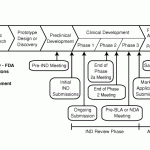
There are now quite a few different ways that myotonic dystrophy can be defeated. To the left is the pathway that the FDA requires and the most advanced pathways are still in animal studies. This is a nice article but technical.

 Therapeutics Development in Myotonic Dystrophy Type I

The publisher’s final edited version of this article is available at Muscle Nerve

Abstract

Myotonic dystrophy (DM1), the most common adult muscular dystrophy, is a multi-system, autosomal dominant genetic disorder caused by an expanded CTG repeat that leads to nuclear retention of a mutant RNA and subsequent RNA toxicity. Significant insights into the molecular mechanisms of RNA toxicity have led to the surprising possibility that treating DM1 is a viable prospect. In this review, we briefly present the clinical picture in DM1, and describe how the research in understanding the pathogenesis of RNA toxicity in DM1 has led to targeted approaches to therapeutic development at various steps in the pathogenesis of the disease. We discuss the promise and current limitations of each with an emphasis on RNA-based therapeutics and small molecules. We conclude with a discussion of the unmet need for clinical tools and outcome measures that are essential prerequisites to proceed in evaluating these potential therapies in clinical trials.


Continue reading

Anesthesia in Congenital Myotonic Dystrophy Case Report

Total intravenous anesthesia in a 10-month-old patient with congenital myotonic dystrophy undergoing endoscopic third ventriculostomy -A case report-

Abstract

Myotonic dystrophy is a rare genetic disorder characterized by muscle atrophy and weakness. Surgical treatment of this condition poses various problems for the anesthesiologist. We describe the anesthetic management of a 10-month-old infant with congenital myotonic dystrophy, who was scheduled for endoscopic third ventriculostomy under general anesthesia. Anesthesia was induced with thiopental sodium, fentanyl, and vecuronium, and thereafter maintained via continuous infusion of propofol and remifentanil. The train-of-four ratio was monitored throughout the operation, and muscle relaxation was reversed with pyridostigmine and glycopyrrolate at the end of the procedure. We show that total intravenous anesthesia using propofol and remifentanil is a satisfactory anesthetic technique in very young patients with congenital myotonic dystrophy.

Continue reading

DM1 Muscle Issues Cured in Mouse Model

Exciting news. This summer researchers at ISIS Pharmaceuticals were able to treat and Cure DM1 in a mouse model (A mouse model is a mouse that has been genetically altered to have the symptoms of DM1) This is really exciting news. The treatment seemed to work well and was by injection. The injection seemed to work long term as well. Next they will most likely use a Monkey and then if that is successful with Humans! This is 5-8 years off and will need millions of dollars of research.

The payoff for these companies will be huge though. With over 42,000 people in North America alone the market size is roughly $1 Billion for the USA. If the injections prove successful a once a year or 2x per year injection would lead to a low-cost of goods sold and high profitability. Worldwide at $20,000 per dose this is about a $17Billion dollar market.

Continue reading

Juvenile and Childhood onset DM

JUVENILE DM

There is not much information on the juvenile form of CMD. There is a really good 30 minutes video about the Childhood forms (Red link at end of column). There is also a drug under development by Ionic Pharmaceuticals in Carlsbad, CA. 

BREAKING NEWS ON TREATMENTS: A recent study (Dec 2015) by Japanese and Polish researchers have found that Erythromycin an FDA approved drug might help with the treatment of Myotonic Dystrophy. This drug helped with the treatment of gastric symptoms in patients with myotonic dystrophy in a separate study in 2002. As the Juvenila and Childhood forms will be there for years your doctor may want to consider this treatment. Read more about this potential treatment here.

Continue reading

Famous and Well Known People that May Have Myotonic Dystrophy


Autosomal dominant Incidence 1:8,000, Congenital form 1/8000

Myotonic dystrophy is characterised by a wasting and weakness of muscles in the arms and legs. The face often develops a mask-like expression, typically with eye drooping (ptosis), though symptoms can vary considerably. A number of historical figures may have been affected by this disease.

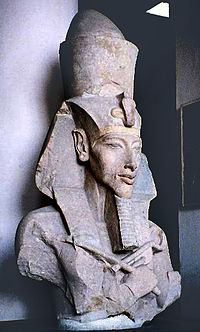
It has been suggested that the pharaoh Akhenaton, of the Eighteenth dynasty of Egypt, had MD. Reigning from around 1350 BC artistic representations of him portray a strikingly bizarre appearance, with a long face, thin and hollow cheeks, a half-open mouth and lowered eyelids known as ptosis.


Another  symptom of myotonic dystrophy are the development of cataracts. Interestingly, a late relative of Claude Monet when presenting with cataracts, also to mild muscle weakness, was found to have a myotonic dystrophy mutation, leading one to suspect the cataracts of Monet himself may well have been a manifestation of this disease.


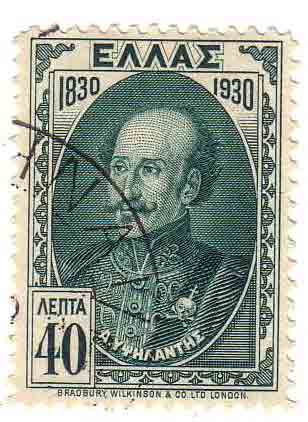
The Greek military commander and national hero Alexander Ypsilantis (1792-1828) has been suggested to have suffered from myotonic dystrophy. His portrait on a stamp shows drooping eyelids, severe weakness and atrophy of the face muscles. His younger brother Demetrious, also a hero in the struggle for independence against the Turks, suffered from the similar ailment as well as other brothers and ancestors of his.